 EveryGen AI
EveryGen AI · AI Video Editor for changes you can describe clearly
Sometimes a shot needs a quieter background, a different outfit, or a more suitable atmosphere rather than a completely new idea. The EveryGen AI AI Video Editor uses MiniMax H3 reference mode to interpret those changes from your footage and instructions. Give the AI Video Editor a focused assignment, then compare the generated revision with the original.
Video workspace
A beige sweater beside the window
18/18View prompt
Use @Video 1, showing an adult woman drinking from a cup beside a window. Change her clothing to a beige knitted sweater with believable folds and soft fabric texture. Aim to retain her appearance, cup, drinking action, camera position, and window lighting. Create a five-second revision with the same setting and no additional props or scene changes.
Introduction
Give the AI Video Editor one clear assignment
Choose the change that would make the clip more useful. The AI Video Editor is a prompt-guided revision workflow, not a reason to replace every visual decision.
Identify the actual distraction
Perhaps a patterned wall competes with the speaker, or the subject’s bright coat overwhelms the composition. Tell the AI Video Editor which issue matters most. Defining a practical problem gives you a better review criterion than simply asking for a more professional result.
Describe the desired replacement
Request a plain warm-gray wall or a deep blue coat with a similar silhouette. Give the AI Video Editor a positive description of the replacement, not only an instruction to remove something. This makes the intended change understandable before you add supporting references.
Separate revision from timeline work
The AI Video Editor uses MiniMax H3 reference mode at 2K, with a five-second starting duration and a five-to-fifteen-second range. It generates revised footage from instructions. It does not provide a timeline for frame-exact cuts or a lossless guarantee for unchanged source regions.
How to use
How to use the AI Video Editor
- InputReference video 1STEP 1
Upload the source
Select MiniMax H3 reference mode in the AI Video Editor and upload the clip containing the scene you want to revise.
- Example settingsMiniMax H32K5sPrompt
 OutputSTEP 2
Describe the change
Tell the AI Video Editor what should change and what should remain recognizable, assigning clear roles to any supporting references.
- Illustrative preview
 BeforeAfter
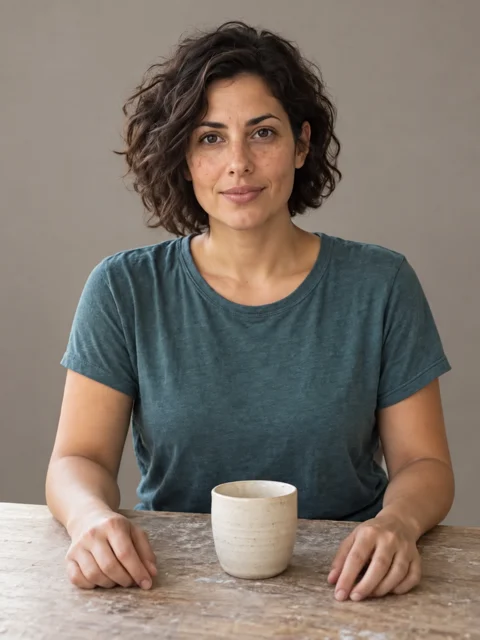
Replace the cluttered studio with a plain warm-gray wall while retaining the subject, table and mug.
STEP 3Create the revision
Start the AI Video Editor at five seconds and 2K, check the displayed credits, and generate the requested short revision.
- STEP 4
Compare both versions
Review AI Video Editor changes and neighboring details against your source, listening to the sound before choosing a result to download.
Features
Tell the AI Video Editor exactly what you mean
Written descriptions need clear referents. Help the AI Video Editor distinguish the intended subject from similar objects and separate the change from details that should remain recognizable.
Name the object and position
Describe the red chair behind the desk rather than just the chair. For a person, identify the foreground subject wearing the green jacket. The AI Video Editor needs an unambiguous target when several objects or people share similar visual features.
- Use position, color, and relationship to identify the intended target.
- Keep AI Video Editor instructions consistent when the subject moves.
Specify the boundaries of the request
Ask to change the coat color while retaining its cut, or replace the wall finish without moving the doorway. Such AI Video Editor boundaries explain your intention. Check the result carefully because a written boundary is not a pixel mask or an exact preservation rule.
Describe the whole relevant interval
A coat may pass behind a hand or disappear briefly at the edge of the frame. Tell the AI Video Editor that the requested appearance should apply throughout the shot. Inspect the return after each obstruction rather than judging only the clearest opening view.

Use the AI Video Editor for coherent appearance changes
A convincing revision connects color, texture, and light. Brief the AI Video Editor on those relationships instead of asking for a new surface without considering its surroundings.
Keep material changes specific
Changing a glossy bag to matte canvas affects its highlights and texture, not just its color. Explain the intended finish in the AI Video Editor. Review handles, seams, and folds so the replacement still reads as one coherent object while it moves.
- Choose a material that suits the object and scene.
- Compare AI Video Editor highlights with nearby surfaces under the same light.
Use an approved visual reference
Upload an authorized image when words cannot clearly convey a garment, palette, or surface. Tell the AI Video Editor which property that image supplies. A clothing reference should guide the outfit rather than silently replacing the subject, pose, and entire background.
Avoid combining unrelated revisions
A new haircut, different coat, replacement room, and changed movement are several distinct requests. Begin with the most useful AI Video Editor change and inspect it. A smaller assignment makes unexpected differences easier to identify and gives the next revision a clearer starting point.

Direct AI Video Editor backgrounds and atmosphere
Background edits affect more than scenery. The AI Video Editor needs a believable relationship between the subject, surrounding space, and the light that connects them.
Keep the subject grounded
When replacing a busy room with a simple studio, describe a floor or support surface appropriate to the action. Ask the AI Video Editor for consistent contact and shadows. Watch the subject’s feet or the object’s base throughout the revised clip.
- Check the scene where the subject meets the surrounding environment.
- Review AI Video Editor edges when hair, fabric, or props cross the background.
Change weather with visible consequences
A rainy atmosphere should affect the visible surroundings, not merely add floating streaks. Tell the AI Video Editor whether the ground is damp, the light is overcast, or the window carries droplets. Keep the request restrained enough to assess these relationships clearly.
Choose a quieter visual hierarchy
For a presentation clip, remove visual competition by requesting a simpler backdrop and softer background contrast. The AI Video Editor should support the speaker or object already carrying the message. Check that decorative lighting or new furniture has not become the most prominent feature.

Organize AI Video Editor references by purpose
Use reference material to clarify the assignment. The AI Video Editor accepts multiple media types, but a small, well-explained set is often easier to direct than an unexplained collection.
Distinguish source from guidance
Identify the main video as the scene to revise. Use another video only when it contributes a specific movement idea. The AI Video Editor should receive a clear explanation of what each source contributes, rather than conflicting requests to reproduce several scenes at once.
Keep uploads relevant
This reference workflow supports up to nine images, three videos, and three audio files. Add only material relevant to the AI Video Editor assignment. When a single source clip and a wardrobe image explain the change, extra references may not add useful direction.
Explain sound separately
An authorized audio reference can guide the desired atmosphere, but do not assume it becomes an untouched track under the picture. Tell the AI Video Editor how sound should relate to the revision, then listen to the output for distracting or mismatched elements.

Review AI Video Editor changes in two passes
First check the requested edit, then check everything around it. This separates success on the main AI Video Editor assignment from unwanted changes introduced elsewhere.
Inspect the intended change
Did the coat become the requested color throughout the shot? Does the simpler wall remain consistent while the subject moves? Evaluate the AI Video Editor against the specific instruction before judging general attractiveness. A polished frame does not prove a complete, consistent revision.
Inspect the neighboring details
Compare faces, hands, props, moving edges, and background openings with the source. The AI Video Editor may alter details outside the requested target. Review normal playback as well as paused moments, particularly where objects overlap or leave and reenter the picture.
Keep the next request focused
Choose the most important remaining issue and revise that instruction. Confirm duration and the displayed credits before another AI Video Editor request. Retain the original source alongside approved versions so collaborators can see which changes were intentional and which still need attention.

Example prompts
Simplify the background behind the subject
Use @Video 1 as the source scene. Replace the busy patterned wall behind the foreground subject with a plain warm-gray studio background. Keep the intended subject, pose, and main gesture recognizable. Match soft side lighting and believable contact shadows. Generate a five-second revision with subdued room ambience. Do not add text, furniture, or extra people.
Apply an approved wardrobe direction
Use @Video 1 as the source footage and @Image 1 only as the reference for the coat’s deep blue color and matte fabric. Revise the foreground adult subject’s coat while aiming to retain its silhouette, the main gesture, and the existing setting. Five-second revision. Keep the soundtrack unobtrusive and avoid new accessories, titles, or scene cuts.
User reviews
EveryGen AI video creator feedback.
EveryGen AI creator reviews

I made a full character PV for my game with MiniMax H3 in one afternoon. The menu UI stayed readable in every frame and the character never went off-model. That used to cost me a contractor and three weeks.

We tested every AI video generator on the market for stylized work. H3 is the only one that held our anime style across cuts. We now use it for pitch reels and animatics on every project.

I uploaded four product photos and got a listing video with music and a voiceover the same day. My click-through rate on the new listings is up 38%. H3 even got the label text on my packaging right.

I ship five vertical videos a week for three brands. MiniMax H3 gets me from brief to draft in under an hour, with sound already synced. My old workflow needed a videographer and two review rounds.

The editing side is what sold me. A client wanted the background of an interview changed — I typed one sentence into MiniMax H3 and the lighting on the subject matched the new scene automatically.

I previsualized my entire short film in MiniMax H3 before we shot a single frame. Rack focus, match cuts, even the title cards — it understands director language, not just keywords.
EveryGen AI · MiniMax H3 Max Pricing and Credit Plans
Cancel anytime
Lite
50% off0.025 / credit
Billed $ yearly179· Save $179.8
Video Models


Image Models



- Includes MiniMax H3 and all premium models
- Up to 1 batch generation task
- Standard generation speed
- Standard generation success rate
- Standard customer support
- Commercial Use License
Standard
50% off0.017 / credit
Billed $ yearly299· Save $299.8
Video Models
Image Models
- Includes MiniMax H3 and all premium models
- Up to 4 batch generation tasks
- Priority processing speed
- High generation success rate
- Priority customer support
- Commercial Use License
Pro
50% off0.014 / credit
Billed $ yearly599· Save $599.8
Video Models
Image Models
- Includes MiniMax H3 and all premium models
- Up to 10 batch generation tasks
- Fastest generation speed
- High generation success rate
- Dedicated account manager
- Commercial Use License
Max
50% off0.012 / credit
Billed $ yearly1,199· Save $1,199.8
Video Models
Image Models
- Includes MiniMax H3 and all premium models
- Up to 10 batch generation tasks
- Fastest generation speed
- High generation success rate
- Dedicated account manager
- Commercial Use License
Pay safely and securely with
























FAQ
Frequently asked questions
Is the AI Video Editor a timeline editor?
No. You upload reference material and describe changes for MiniMax H3 to interpret. Use a separate conventional editor when you need exact cuts, track arrangements, frame-by-frame adjustments, or final assembly of a longer sequence.
What can I ask the AI Video Editor to change?
Describe changes to appearance, background, atmosphere, or motion. Start with a clearly identified subject and one useful revision. A request guides generation; it does not guarantee that every detail outside the target will remain unchanged.
Can I supply pictures alongside my source video?
Yes. The AI Video Editor reference workflow accepts up to nine images, three videos, and three audio files. Explain each item’s role, such as garment appearance or environment, and use only material relevant to the requested revision.
Will the original face and speech remain exact?
The AI Video Editor does not guarantee identity preservation, unchanged speech, or precise mouth timing. Compare the full revision with the source. For material where those details must remain exact, retain the verified original footage in your editing workflow.
Does selecting 2K restore missing source detail?
No. The AI Video Editor generates a 2K interpretation in this workflow; that does not prove recovery of information absent from the source. Judge the actual result, especially faces, lettering, textures, and small objects that carry factual meaning.
CTA
Give the AI Video Editor a focused change
Start with the source you want to improve and one revision you can describe precisely. Review your references, settings, and displayed credits, then compare the result with your original.
Describe your video edit